Ayia Napa Aqueduct
Ayia Napa is famous for beaches, beach bars, and the occasional wild night that lasts until sunrise.
But hidden just a short walk from the town center lies a much quieter attraction — the Ayia Napa Aqueduct.
This historic stone structure once carried water to the area centuries ago and today stands as a fascinating reminder that long before pool parties and cocktail bars, people here had a different priority: getting fresh water into town.
If you enjoy discovering historical spots that most visitors walk right past, the Ayia Napa Aqueduct is a surprisingly interesting stop.
A Quick Introduction to the Ayia Napa Aqueduct
The Ayia Napa Aqueduct is a historic water supply system located close to the famous Ayia Napa Monastery and the town center.
Built centuries ago, the aqueduct was designed to transport water from natural springs outside the town into the settlement.
Like many aqueducts across the Mediterranean, it relied on gravity and carefully engineered stone channels to transport water over uneven terrain.
Today, what remains are the stone arches and sections of the water channel, offering visitors a glimpse into the clever engineering that helped sustain life in Ayia Napa long before modern plumbing existed.
A Piece of Medieval Engineering
Although the exact construction date is debated, historians believe the aqueduct dates back to the Venetian or Ottoman periods, when Cyprus relied heavily on sophisticated water management systems.
The structure used gravity to move water along a slight downward slope, ensuring a constant flow toward the town.
The elevated stone arches allowed the water channel to cross small valleys and uneven ground without losing its gradient.
In simple terms:
Ancient engineers built a stone bridge — but instead of people walking on it, water flowed across it.
Why Water Was So Important Here
Ayia Napa sits in a relatively dry part of Cyprus. Natural springs existed outside the town, but transporting that water to where people lived required careful planning.
The aqueduct helped provide water for:
Drinking
Cooking
Agriculture
Local monasteries and settlements
Without systems like this one, life in the area would have been much more difficult — especially during long Cypriot summers.
What You Can See Today
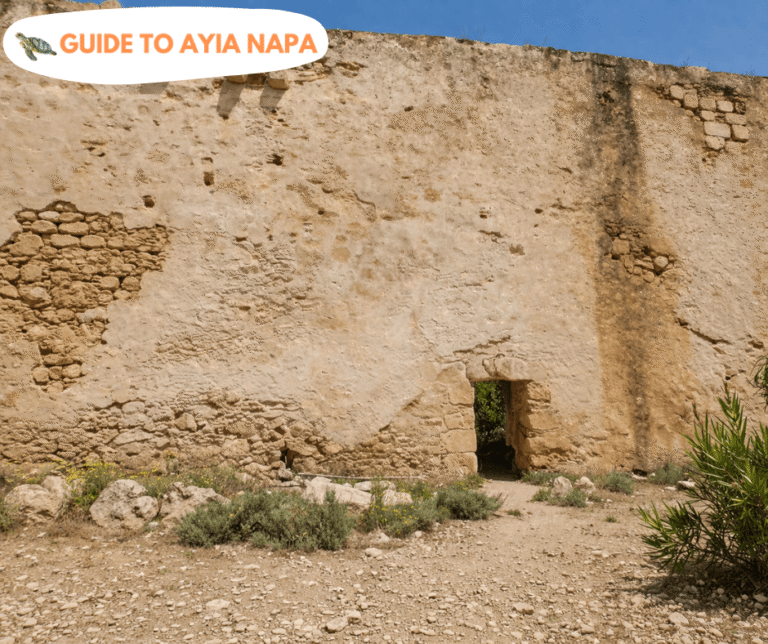
While the aqueduct is no longer operational, several parts of the structure still survive and are visible today.
Visitors can see:
Stone arches supporting the water channel
Sections of the original aqueduct pathway
The surrounding natural landscape where the water once flowed
The remains may look modest compared to massive Roman aqueducts, but they still showcase impressive craftsmanship and durability.
After all, these stones have been standing for centuries, which is more than can be said for many modern buildings.
A Hidden Historical Stop Near the Center
One of the best things about the Ayia Napa Aqueduct is how easy it is to visit.
It sits just outside the busy center of town, meaning you can combine it with a short walk to other nearby attractions such as:
Local walking paths and green areas
Because it’s not a heavily promoted tourist attraction, you’ll often find the area peaceful and quiet — a nice contrast to the lively atmosphere of the main strip.
Why History Lovers Will Appreciate It
For travelers who enjoy exploring beyond beaches and nightlife, the aqueduct offers something different: a glimpse into the practical history of everyday life in old Cyprus.
Instead of temples or castles, this structure represents something more fundamental — the infrastructure that allowed towns to survive.
It’s a reminder that before tourism, hotels, and beach clubs, Ayia Napa was simply a small settlement that depended on clever engineering to thrive.
A Perfect Quick Photo Stop
Even if you’re not a hardcore history fan, the aqueduct is still worth a quick visit.
The stone arches and rustic surroundings make for a surprisingly photogenic scene — especially during the golden hour when the warm Cypriot sunlight highlights the texture of the old stones.
It’s the kind of place where you stop for “just a minute”… and end up taking ten photos and wondering how old the structure really is.
Tips for Visiting the Ayia Napa Aqueduct
Before you head out to find this hidden piece of history, here are a few quick tips:
Wear comfortable shoes if you plan to explore the surrounding area
Bring water during the summer months
Combine your visit with nearby attractions
Visit in the early morning or late afternoon for the best light
And remember: sometimes the most interesting places in a destination are the ones without souvenir shops or ticket booths.
| Feature | Information |
|---|---|
| Attraction Name | Ayia Napa Aqueduct |
| Location | Near Ayia Napa town center, close to Ayia Napa Monastery |
| Historical Period | Likely Venetian or Ottoman era |
| Purpose | Transporting water from natural springs to the settlement |
| Main Highlights | Stone arches, historic water channel, quiet historical site |
| Entrance Fee | Free |
| Recommended Visit Time | 10–20 minutes |
| Best For | History lovers, photographers, curious explorers |
| Nearby Attractions | Ayia Napa Monastery, Ayia Napa Square, town center |
| Accessibility | Easy to reach on foot from central Ayia Napa |