Sycamore Tree (Ficus Sycomorus Ayia Napa)
Right in the center of Ayia Napa—just steps from the southern entrance of the Ayia Napa Monastery—stands one of the town’s most quietly impressive landmarks: the Sycamore Tree (Ficus sycomorus).
This isn’t just a tree you walk past. It’s a living monument, deeply rooted in the town’s history, folklore, and identity.
A 600-Year-Old Witness to History
If trees could talk, this one would probably need a podcast series.
The sycamore tree is estimated to be around 600 years old, meaning it has stood here long before Ayia Napa became a tourist hotspot.
According to local folklore, it was planted during the Venetian era by a noblewoman who sought refuge in a nearby cave.
Legend has it she later founded the monastery after being forbidden to marry her true love—so yes, even this peaceful tree comes with a bit of drama.
A Tree with a Legendary Backstory
The story behind the tree adds a layer of romance (and tragedy) to your visit.
The Venetian noblewoman’s tale is one of love, exile, and devotion. After retreating to the area, she is said to have transformed the site into what would eventually become the monastery, making this tree not just a natural landmark but part of a founding myth of Ayia Napa itself.
A Giant with Character: Physical Features
This isn’t your average roadside tree.
The sycamore fig is known for its:
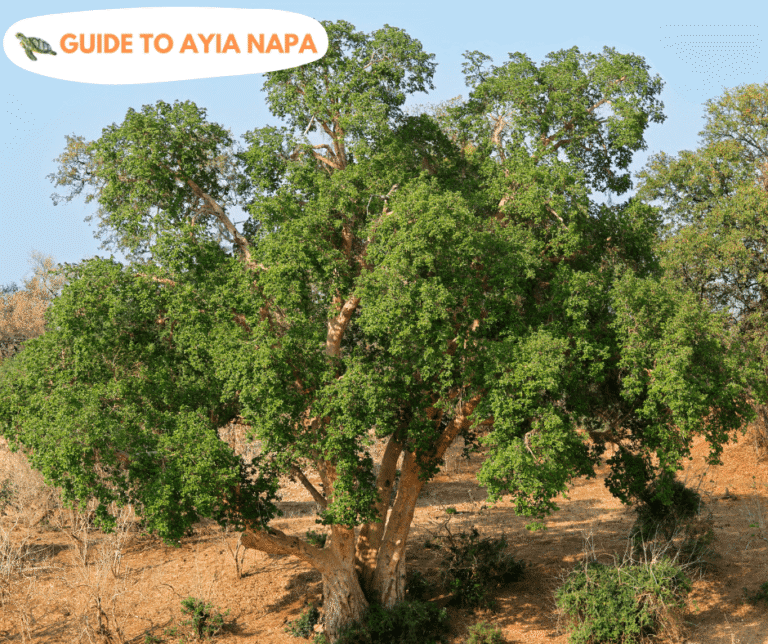
- Thick, twisted trunk that looks like it’s been sculpted over centuries
- Wide-spreading branches that create a natural canopy
- Massive shade coverage, which—trust me—you’ll appreciate in the Cyprus heat
Due to its age, some of its large branches are now supported by wooden structures, helping preserve it for future generations.
Rooted Above History: The Hidden Water Source
Here’s a detail most people miss:
The tree actually grows above an ancient water reservoir linked to the monastery. This constant water supply is one of the reasons it has survived for so many centuries.
So while it may look like it’s just chilling in the square, it’s actually been quietly thriving thanks to a very strategic location.
A Cultural Landmark, Not Just a Tree
Locals don’t see this as just greenery—it’s considered a “living monument”.
Near the tree, you’ll find a small tribute to George Seferis, who visited the site and was inspired to write about it. That alone tells you this place has a certain poetic charm.
It connects Ayia Napa’s past to its present in a way that no modern attraction really can.
A Peaceful Spot in a Busy Town
Let’s be real—Ayia Napa can get loud.
This tree offers the opposite:
- A shaded resting spot
- Benches to sit and take a break
- A moment of calm just meters away from the town’s energy
It’s one of those rare places where you can pause, breathe, and actually feel the history around you.
Even More Impressive After Dark
If you’re wandering around in the evening, don’t skip it.
The tree is beautifully illuminated at night, giving it an almost theatrical presence.
The lighting highlights its twisted branches and creates an entirely different atmosphere from daytime.
It’s subtle—but surprisingly memorable.
A Surprisingly Great Photo Spot
Yes, it’s “just a tree”… but it photographs extremely well.
Between the dramatic trunk, the monastery backdrop, and the soft evening lighting, it’s a great place to:
- Snap something a bit different from beaches and sunsets
- Add a historical vibe to your feed
- Capture a quieter side of Ayia Napa
Is It Worth a Stop?
Absolutely—especially since you’re probably passing by anyway.
It’s not a destination you plan your day around, but it’s one of those places that:
- Adds depth to your trip
- Gives you a break from the heat
- Leaves you with a surprisingly strong impression
Sometimes, the most memorable spots aren’t the loudest—they’re the ones that have been there all along.
| Category | Details |
|---|---|
| Attraction Name | Sycamore Tree (Ficus Sycomorus) |
| Location | Southern entrance of Ayia Napa Monastery, Ayia Napa, Cyprus |
| Type | Natural Landmark / Historical Tree |
| Estimated Age | Approximately 600 years |
| Entrance Fee | Free |
| Opening Hours | 24/7 (public outdoor site) |
| Visit Duration | 5–15 minutes |
| Best Time to Visit | Morning for shade or evening for lighting |
| Highlights | 600-year-old tree, Venetian legend, night illumination, central location |
| Nearby Attractions | Ayia Napa Monastery, Central Square, cafés and restaurants |